
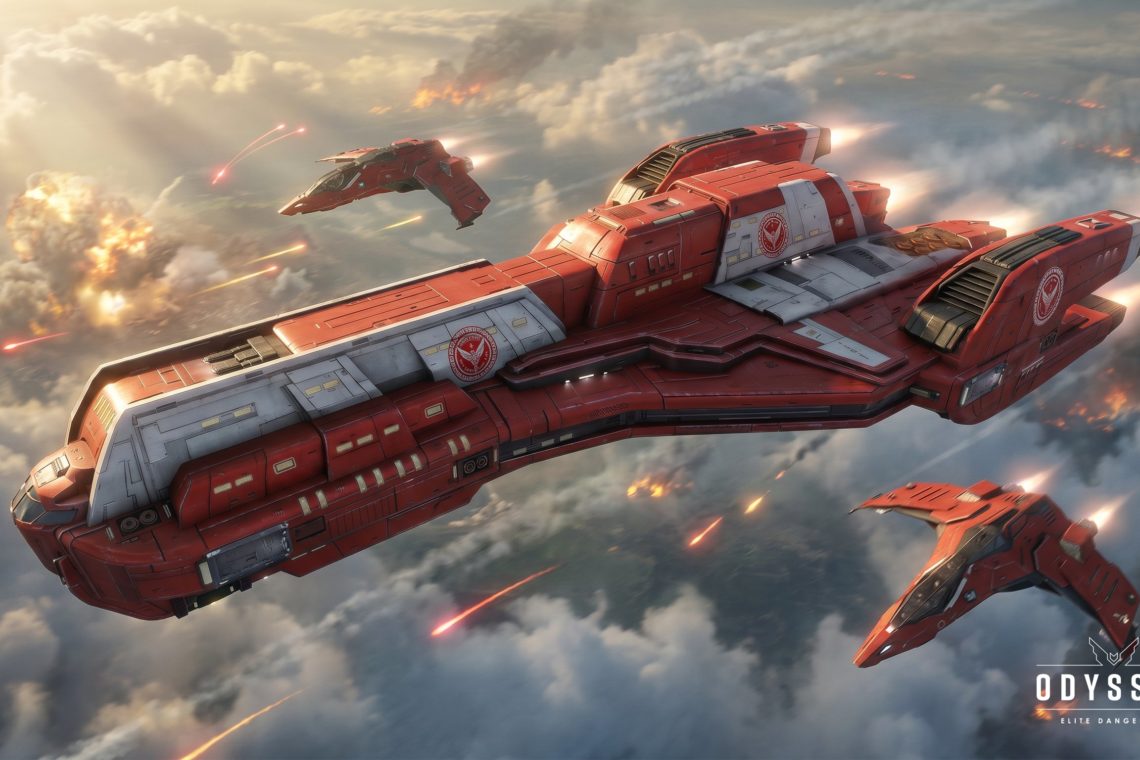
Burning stations, Thargoid attacks, orbital accidents, pandemics, terrorist strikes: MediCorp has always been a key player in evacuations within disaster zones. With the arrival of Zorgon Peterson’s new vessel in April 3312, our organization is strengthening its efforts with a new iteration of its protocol: MedEvacLynx, designed around the Lynx Highliner.
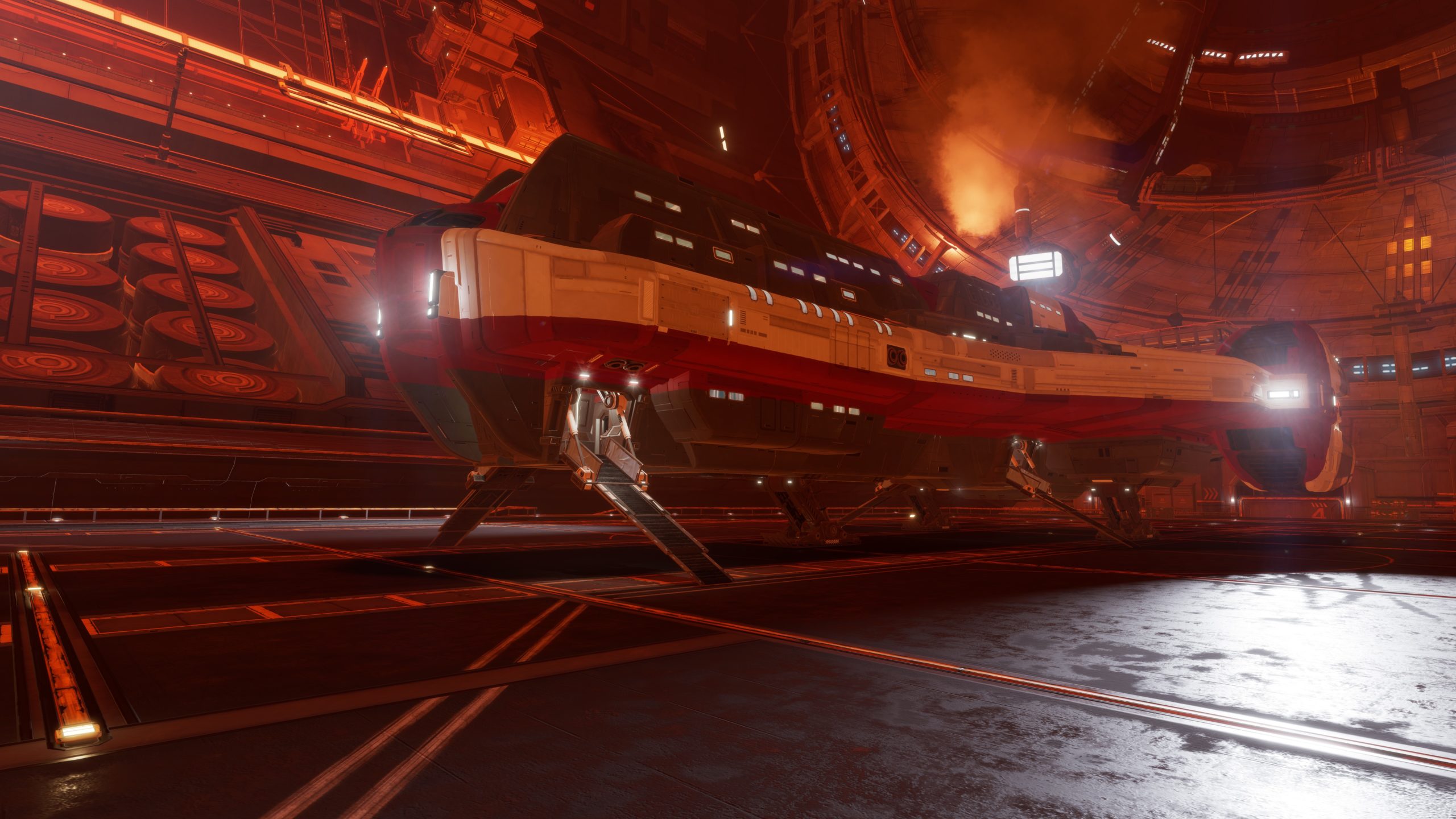
Built for mass transport, the Lynx Highliner can secure, in just a few rotations, a volume of refugees previously beyond the reach of medium-sized vessels. Its strategy relies on two key elements: new MkII cabin modules (see below) and a significant increase in boarding and disembarkation flow. Indeed, the Lynx features four access gangways (two at the bow, two at the stern) positioned port and starboard. The gangways deploy automatically as soon as the landing gear touches down.
New MkII Cabins – A Revolution for MediCorp
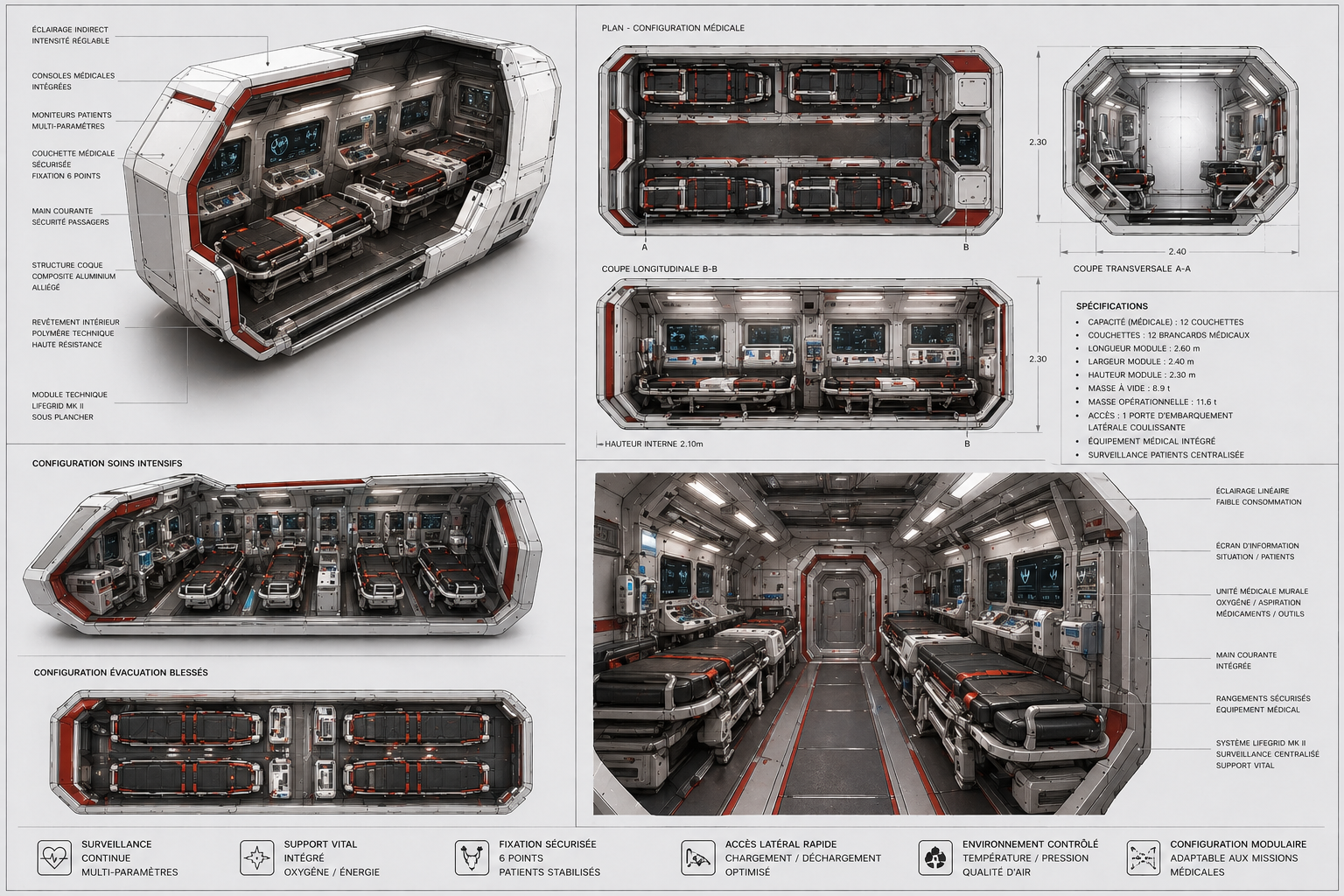
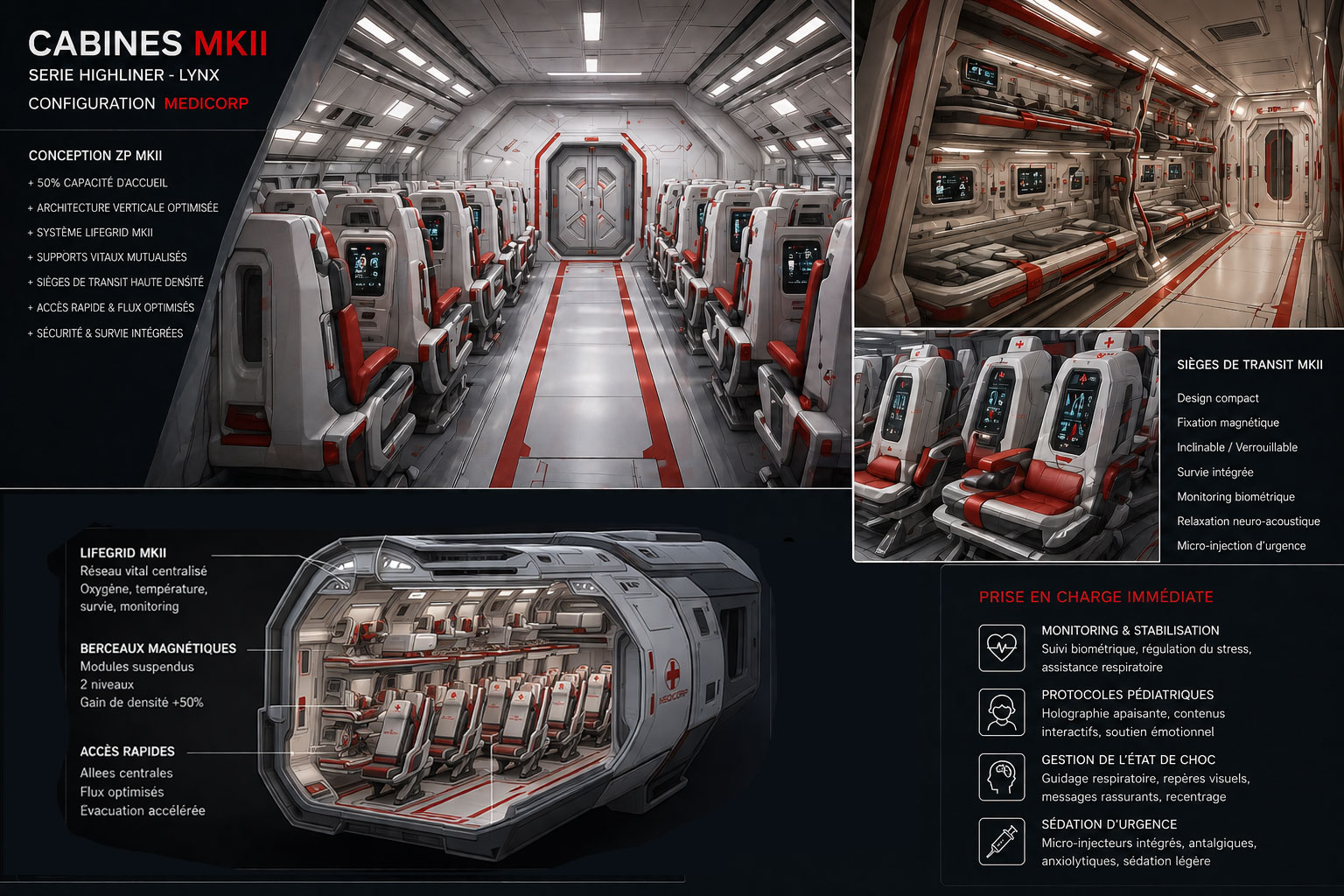
The new MkII cabin modules form the very core of the MedEvacLynx protocol and represent a capability unique to this ship. This increased capacity is the result of a series of deliberate technological trade-offs, carefully adapted by MediCorp in close collaboration with Zorgon Peterson to meet its operational requirements.
How did we achieve 50% more capacity while preserving the essentials?
Zorgon Peterson’s engineers no longer speak of “cabins,” but of adaptive transit modules, because the goal is no longer to provide the refined luxury of a tourist liner, but to design a space optimized for human flow in critical situations:
- evacuations from burning stations,
- refugee evacuations,
- large-scale medical transfers,
- emergency repatriations,
- deployment of major medical contingents,
- etc.
Every cubic meter has been rethought. Where older cabins prioritized individual space, the MkII adopts an architecture inspired by military orbital transport and transit shuttles. This is based on several key architectural choices:
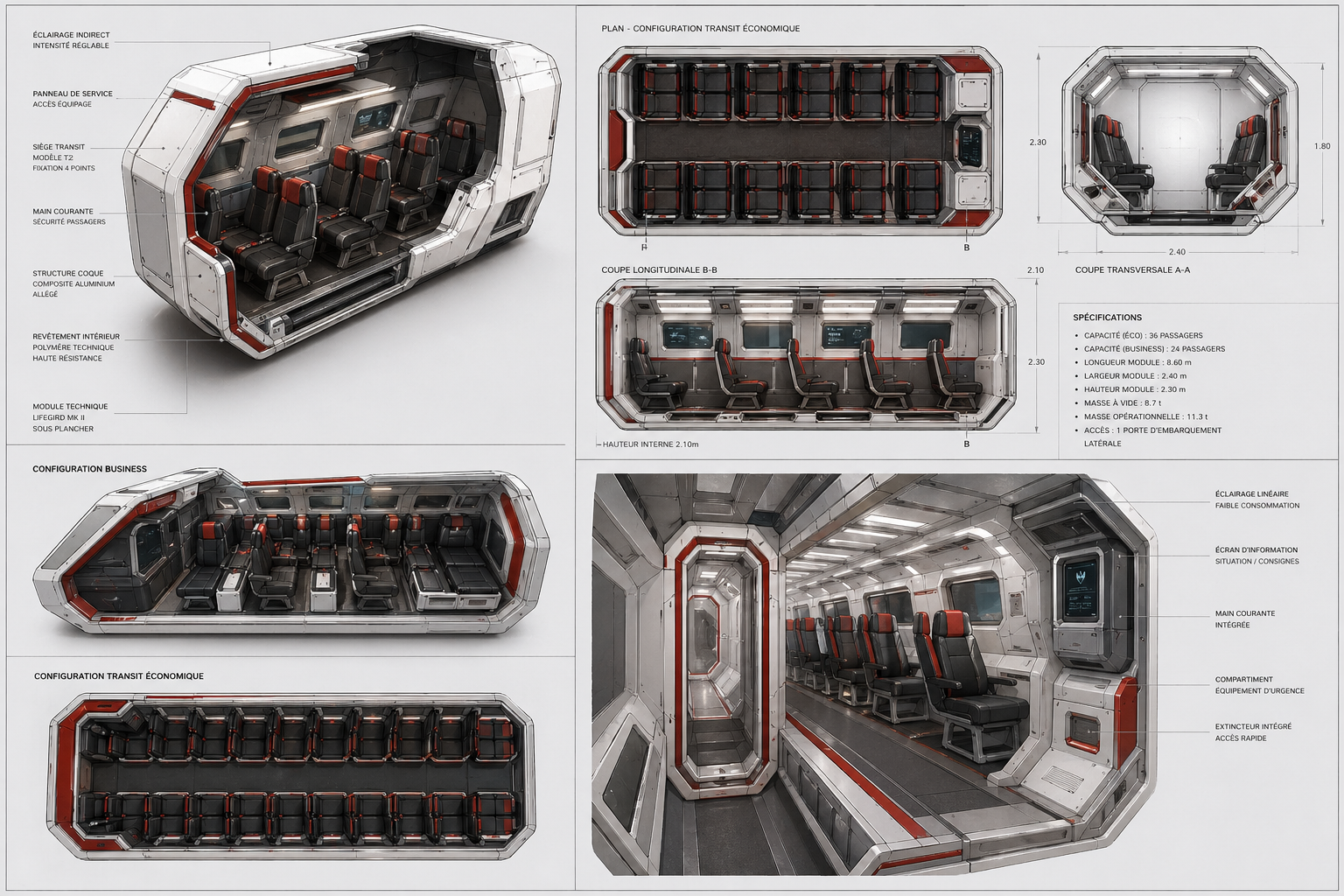
The first major change lies in the structure of the module itself. Internal walls now use shape-memory composite alloys, thinner yet capable of absorbing the thermal and vibrational stresses of superluminal flight. The gain may seem minimal per partition, but across the entire module, it frees up several cubic meters of usable space. This reclaimed volume allows for the addition of new rows of transit seating or sleeping pods.
Another key decision was the removal of non-essential luxury elements, unsuitable for rapid, non-touristic rotations. This is likely the most visible change, as MkII cabin modules abandon features associated with long-distance civilian comfort:
- numerous private luggage compartments,
- premium seating,
- lounge and entertainment areas,
- individual dining spaces,
- personal spaces.
In their place, Zorgon Peterson has introduced a Rapid Flow Layout configuration: passengers are arranged in compact modules with quick access to central aisles. The objective is no longer the journey itself, but survival and rapid turnaround.
MediCorp Philosophy for MkII Cabins
Evacuation begins on board. At MediCorp, a doctrine has emerged through successive crises: an evacuation is never merely a logistical transfer. The moment a civilian steps onto the Lynx ramp is not the end of danger—it is the beginning of their care.
Physical injuries represent only part of the mission. Rescue teams are regularly confronted with passengers in shock: survivors of Thargoid attacks, families torn apart in the chaos, children pulled from burning stations, technical personnel exposed to traumatic scenes. For MediCorp, such situations demand an immediate response.
The MkII cabins have therefore been designed around a simple principle: every seat is an emergency stabilization point.
Beneath their apparent simplicity, the passenger modules embed advanced support technology exclusive to MediCorp. Each seat now integrates:
- passive biometric monitoring: heart rate, oxygen saturation, temperature, stress levels,
- a neuro-acoustic relaxation system: directional audio diffusion, calming frequencies, anxiety spike reduction,
- micro-diffusion of regulatory aromas: mild calming agents and enriched oxygenation,
- adaptive soft restraint: automatic support for disoriented or lightly injured passengers.
The objective is not comfort, but to rapidly return each passenger to a stable physiological state.
In cases of shock or emergency, MkII cabin seats and berths are equipped with dedicated tools, developed from extensive field feedback provided by rescue teams. The MkII modules can automatically activate crisis-management systems—low-intensity pulsed lighting, reassuring vocal messages, neuro-cognitive grounding assistance—and, in more severe cases, are capable, under medical supervision, of administering analgesics, anxiolytics, or even light sedation.
Pediatric Protocols – Care for Children
MediCorp has placed particular emphasis on the care of younger evacuees. Field feedback has shown that evacuated children frequently present with:
- panic attacks,
- post-traumatic mutism,
- spatial disorientation,
- dissociative episodes.
To better support these particularly vulnerable civilians, front-row seating is equipped with a dedicated pediatric mode, featuring a range of holographic interfaces deployed at eye level. These systems can project calming environments, reassuring planetary landscapes, interactive animations, and conversational medical avatars, among others. Such projections help redirect attention away from immediate stress and mitigate the escalation of panic.
For a child, the first treatment is not always an injection. Sometimes, it is a calm voice and a soft light..
How to Evacuate Civilians – Guidance for Rescuers
Evacuation missions are at the very core of MediCorp’s operations and cover a wide range of scenarios. The vessel must be specifically prepared for evacuation duties. Several recommended loadouts are available in our shipyard—feel free to consult that page or ask for assistance on our server.
For most evacuations, passenger count is the primary parameter (and sometimes the only one) to monitor. However, certain situations—such as burning stations—require additional modules and specific considerations.
Evacuations in a Burning Station
The Lynx Highliner is particularly well-suited to these scenarios: it is fast, agile, runs relatively cool, and offers a very high passenger capacity. That said, a few critical points must be addressed, and proper configuration is essential:
- Heat management is critical. Inside a burning station, temperature rises rapidly—extremely rapidly. Your first priority is to equip your ship with at least two heatsinks (preferably engineered for increased ammo capacity).
- Lower your ship’s baseline heat. One often overlooked module is the power plant. MediCorp strongly recommends applying a Low Emissions modification to significantly reduce heat generation.
- Speed is an asset. Engine modifications can be beneficial. Consider either Dirty Drive Tuning (for maximum performance) or Clean Drive Tuning (which generates less heat).
- Cabin configuration. Your rescue ship must be equipped with Lynx-specific MkII cabins. While it is possible to run purely economy cabins, some civilians will request business-class accommodation. (Note: only economy and business MkII variants exist.)
- Autopilot: a false friend. Be cautious with the auto-docking module. While autopilot is engaged, you cannot deploy a heatsink. You must either avoid using it or temporarily disengage it (by applying thrust) to deploy a heatsink when needed.
- Hull and shields matter. Burning stations are filled with debris that can damage your ship—not to mention potential hostile encounters. Reinforced hull plating (military-grade recommended) and a solid shield generator are strongly advised.
Evacuation Protocol
- At 7.5 km, request docking clearance.
- Once inside the station, avoid debris.
- Proceed to your assigned pad and, just before touchdown, deploy a heatsink.
- Once landed, you will automatically be moved into the hangar.
- Inside the hangar, you can ignore heat levels and warning messages.
- Open the mission board → passenger transport.
- Fill your cabins and prepare for departure.
- Immediately after takeoff: deploy a new heatsink.
- Head for the exit while avoiding debris and monitoring heat (deploy additional heatsinks if required).
- Once clear of the station, temperature will drop rapidly.
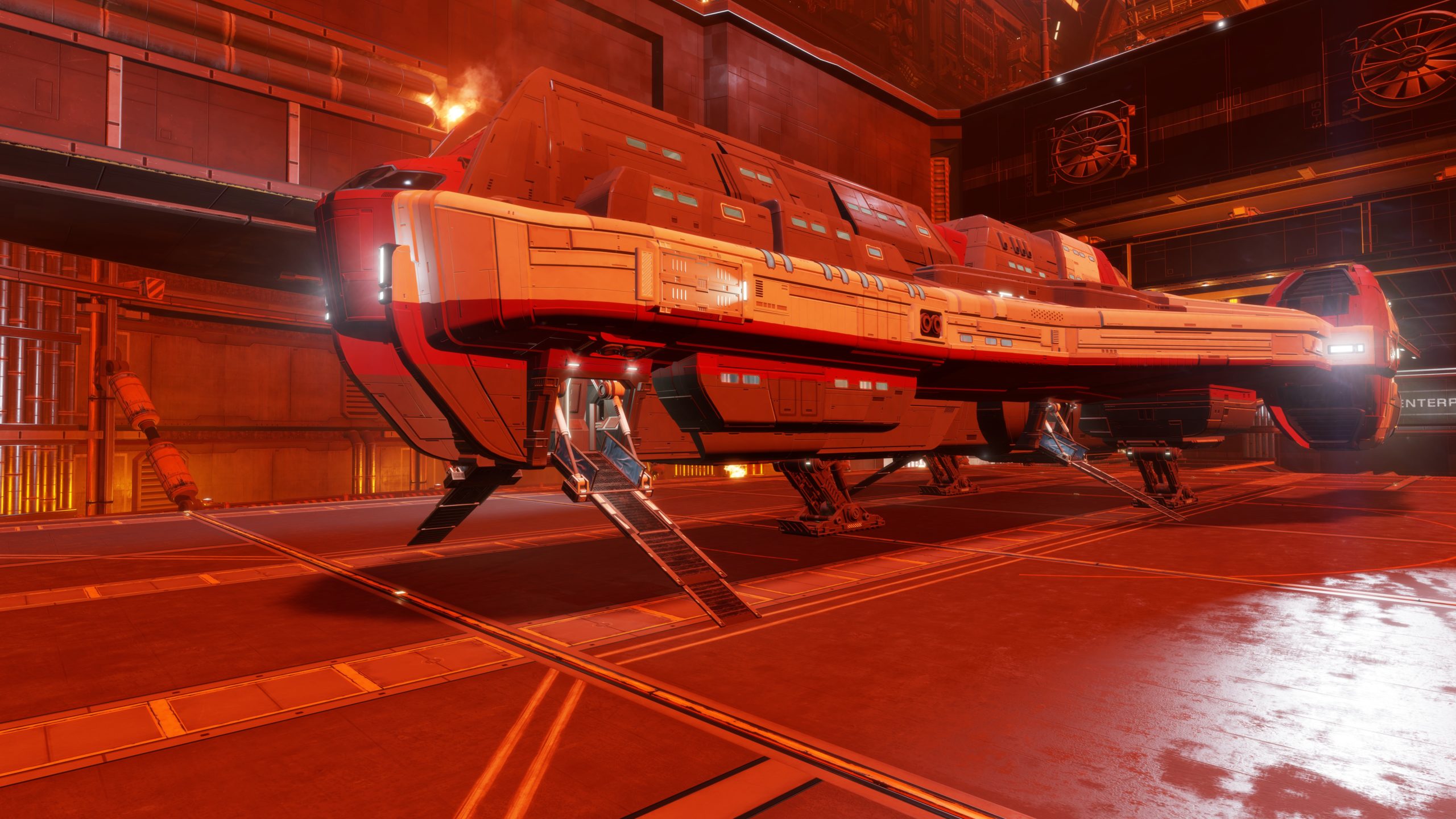
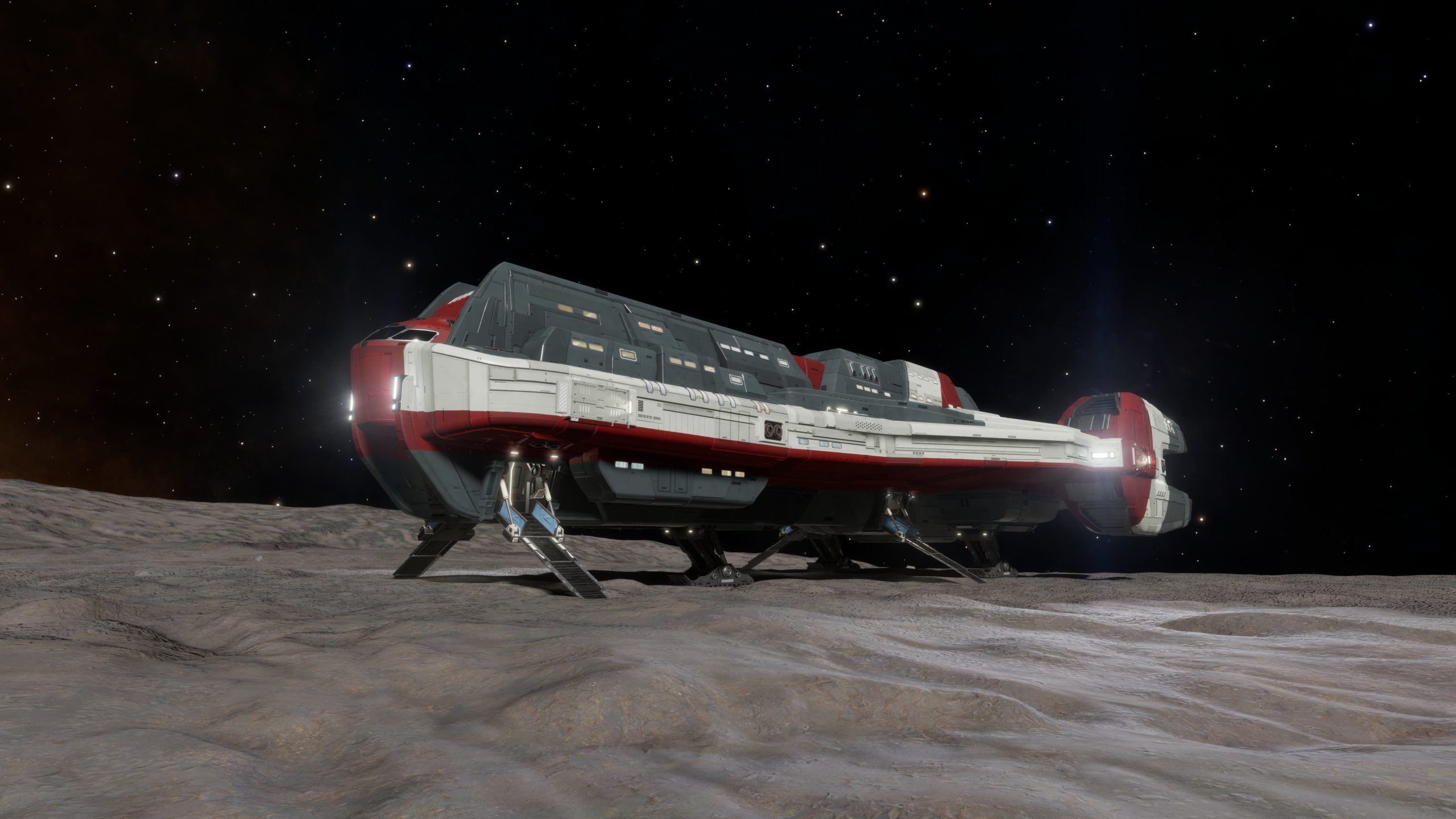
Image: https://x.com/CMDR_FOSDYKE